
HELPFUL INFO /FREQUENTLY ASKED QUESTIONS
How to choose a Leather Coat
Can you alter a leather coat to be a smaller size?
How to care for a leather jacket
HOW TO CLEAN A LEATHER JACKET, OR LEATHER GARMENT
Check your garment after you wear it every few times. The sooner you clean makeup off, the better the results. (Wearing a scarf around the neck is a major step towards a clean collar!)
Your best solution is to use Aquila Leather Cleaner! Just spray and wipe. Let dry 15-20" and repeat if desired.
If you do not have Aquila- wipe the surface with a damp lint-free cloth. You can use clean water or a very diluted solution of mild soap, like Ivory or Woolite, to dampen the cloth. Do not scrub. Wait 15-20” for it to dry and repeat if necessary. Moisturize and protect.
HOW TO REMOVE A GREASE SPOT FROM LEATHER
If you get a butter or an oil spot on your leather jacket at dinner, take it off as soon as you get home! The sooner you begin the cleaning process, the better the results will be.
Lay your garment out on a clean surface. Place a small pile of cornstarch on the spot. Do not press it in, and do not touch it or move it for a day. It will draw a large part of the oil to the surface. Then, lightly brush the cornstarch off without getting it on the rest of the jacket. This is sort of hard to do. Roll your item back so the area is hanging off the table. Again, lightly brush it away, do not rub it into the leather.
Then wipe the rest of the white powder away with a barely-damp lint-free cloth. Do not scrub. You can use clean water to dampen the cloth if you do not have Aquila Leather Cleaner. Let that dry and repeat if necessary. This is a good time to go ahead and clean the whole coat. Let dry completely, then moisturize and protect.
HOW TO STORE A LEATHER JACKET OR LEATHER COAT
It’s a good idea to clean your leather leather jacket before storing. Also, discounts on reconditioning and repair services are frequently available in spring and summer months, so check it over so it’s ready when you are, and maybe save some money too.
So clean and moisturize and then make sure it’s dry before you hang it up. Remember leather needs to breathe, so avoid plastic bags unless it will be for a very short period of time. Place squarely on a padded hanger. A natural fabric drape to cover it with is a good idea. An old sheet and with a hole for the hanger will work. This prevents dust from settling on the shoulders. Hang in the closet, or away from sun and dry heat vents. Make sure it is not packed tightly between other hanging items.
The leather itself is, of course, the biggest factor. Most of what is on the market today in smooth leather, is lamb or cowhide. Pigskin is not common in smooth leather. It is usually tanned for suede. (We'll do a separate article on suedes.) Only occasionally will you find garments made of goat. These are usually very inexpensive and most likely will have an undesirable sprayed dye finish*. (While some cowhides have this finish as well, it is not common, and cowhide is almost always a good choice.) Deer, elk, and moose are commonly made into garments, but not usually found in the stores.
So, when shopping, you are in all likelihood choosing between lambskin or cowhide.
Lambskin is beautiful, soft as butter, and feels like a second skin on you! Accordingly, lambskin is delicate. It tears easily and the finish wears off quickly. If you find a lamb jacket you want for the style, fit, or feel, then buy it, and Leather CARE Specialists can help you take care of it.
On the other hand, cowhide is much tougher and the finish lasts longer. If you don't want to be concerned about jumping in the car or truck, being careful with the seat belt, or shoving your gloves in your pockets, you should buy a cowhide. Keep it conditioned properly and you could have that cowhide jacket your entire life.
New tanning processes are delivering some “lambtan” cowhides that are very close to the feel of lamb. If you prefer the luxury of lamb but need the practicality of cowhide you should consider these. Labels will still only say “100% Leather.” Ask your clerk to be sure of what you are buying.
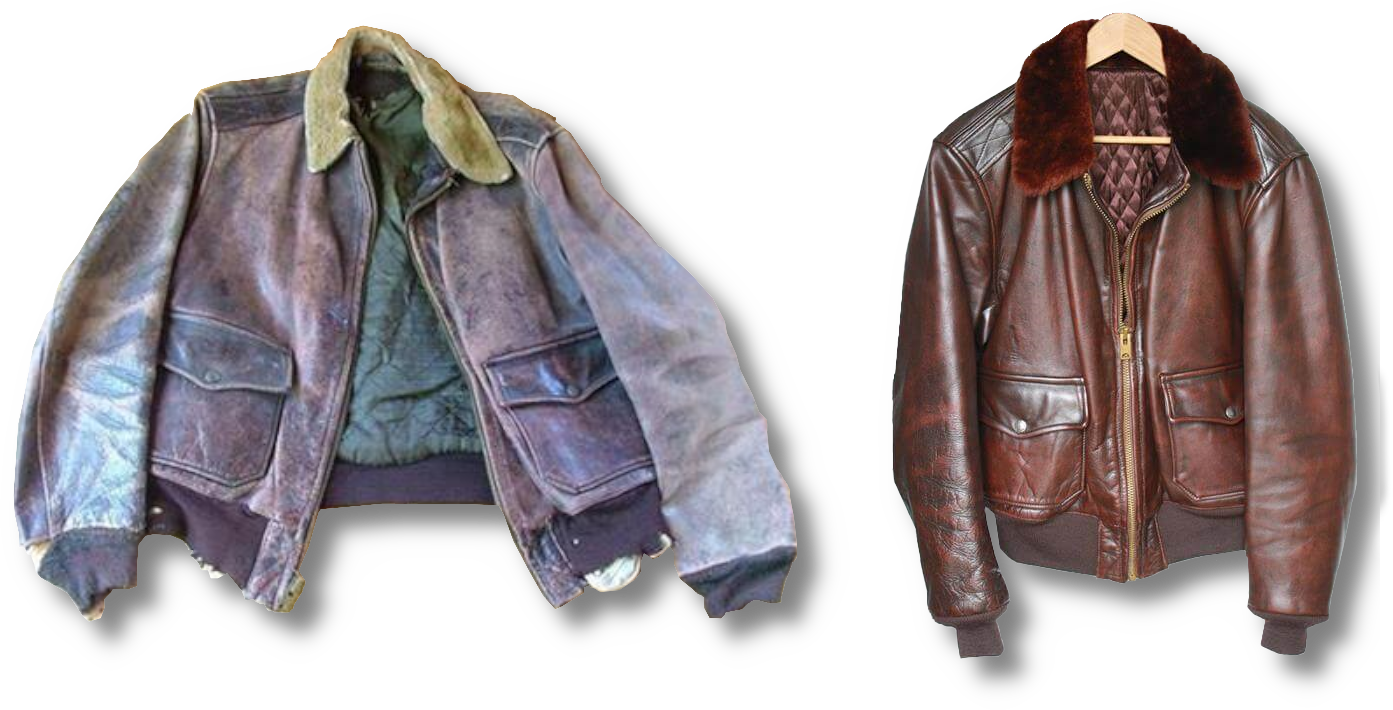
Now look the leather over. Does the leather have some body to it, a good moist look, and do the panels show consistency in cutting from the best sections of the hide? Take a fold and see if it feels smooth when you move it back and forth between your fingers. Check for quality skin (see the photos below) Very thin places should give themselves away. Also, skivers can leave hairline cuts that go almost though. You can usually spot these from the outside.
The underside of a quality skin. The underside of a poor quality skin.
The flesh is very thin in spots and will give way to any small stress. This is an animal that was treated poorly, handled roughly, and, if only for this reason, you shouldn't buy it.Regardless of what leather you choose, check the stitching. If the thread is dull, it is probably all cotton. You should be looking for bonded nylon to hold your coat together. Cotton wears wherever it rubs and you will end up with seams where the top thread is completely gone. Also, look to see if the stitching is backstitched at the seam ends, and tight (indicating correct tension on top and bottom threads).
Check the panels at the pockets, elbows, and stress points for strength. If they seem thin or stretchy, look for a different jacket. The upper outside arms are one of the most common areas that we receive at Leather CARE Specialists for repairs. This area is susceptible to tears, so make sure these panels feel strong without weak spots (see photos).
Are the buttons sewn securely with no loose ends? Are the snaps secure?
Is the zipper sewn in properly? A zipper that is set in too close to the stitch line (the zipper head drags or the head sticks) will result in faded worn edges. Also, if the zipper is not sewn in nice and flat, it will be problematic. It may split open, jam, or wear out quickly at the pin (see photo on Shipping Garments page).
A quality lining will have a very tight weave and quilted linings should use “lock” stitches.
Lastly, the price. Most likely you'll pay extra for a good coat, but it will be well worth it, and now, you are equipped to pick one!
---CHECK LIST: LEATHER, STRESS AREAS, THREAD, CLOSURES, LINING
---*Sprayed Dye Finish
This is where the hides have not been dyed in vats during the tanning process, allowing for color penetration all the way through the skins. You can spot these skins by checking the garment at the stitching needle holes, or at corner edges (collar tips, for example, where the leather has been pulled to turn). If the “paint” has been added after the tanning process there will be places where the finish cracks and you will see light colored flesh showing through.
CAN YOU ALTER A LEATHER COAT TO BE A SMALLER SIZE?
Of course, the degree of difficulty corresponds with the degree of change.
Taking a coat in at the waist, sides, or back seam, may not be a big project - if you are able to take it in enough without going into the sleeves (side seam) or collar (back seam). As long as you can start at the bottom of the sleeve hole or beneath the collar.
If it is a lamb coat, the seam allowances that have been glued down flat may have adhered permanently (glue on lamb sticks!). These are really hard to get up and sometimes they have to be cut away in places with a razor blade, which makes it difficult to get smooth transition in the areas where you begin and end tapering. With some skill this may not be too noticeable, but requires more time than taking in a cowhide.
To fully resize a coat, more than taking it in at the side or back seams has other considerations. As you take in the sides, it does pull the sleeve hole in on the sides, making it smaller, but it may have been cut too deep to ever look and function correctly. Also, how much can it be changed without negatively affecting the pocket placement? (This is also a consideration if you want to cut a long coat off.) Possibly enough could be taken out of the back by going straight up into the collar. Then resizing the collar and putting it back on. Communications and a fitting take time as well.
Hopefully, you just need your coat taken in as we described in the first paragraph above. But if you are still considering a whole new size because it is a coat you really love and you can't find one like it anywhere else, and you are willing to go the expense, we will be happy to consult with you. If you are not in our local area you will need a digital camera, the ability to email photos, and someone to measure for you.
HOW TO CARE FOR A LEATHER JACKET
* First look it over carefully and try to detect if there are any weak spots in the panels and try to protect them by not stressing them. You can read more about this on our Helpful Info page "Now look the coat over..."
* Protect the back panels of the jacket where you sit, by just taking a little care with them when you get in and out of the car.
* Notice where a seat belt may rub. If you have a lamb jacket you may want to keep a scarf in the car to throw over your shoulder before you put your seat belt on.
* Be observant when you put your gloves in your pockets. Don’t wad them up and jam them in the pockets or your jacket my tear at the corners of the pockets.
* When zipping your jacket, make sure the pin is seated well in the box before you pull on the zipper pull. If it is not, it’s not going to zip and each pull will put unnecessary wear on the tape at the pin. There is a picture of a zipper worn at the pin on our Shipping page.
* Keep it moist. Use a good leather conditioner on a regular basis. We think the Urad products are the best made! After you condition your coat you can seal the moisture in and help to keep the elements and dirt and oil out with a good water repellent spray. Our pick for conditioning.
* If your jacket gets wet, wipe off the surface moisture with a clean dry towel and hang it up in a well ventilated area, but not where there is a hot air vent blowing on it. Let it dry naturally.
* Never store in a plastic bag. You can take an old sheet and put a hole in it and hang it over it in the closet if you are storing it for a long time. But don’t pack it in tightly between other coats. Hang loosely.
* If it tears, get help right away. Never put tape on a tear, as it will pull up the fibers when you take it off and make the tear worse. And never use those tear kits, you can see the disastrous effect at the bottom of our Tears page.